
The healthcare industry is one of the few sectors that never slows down. No matter the economy, healthcare providers need reliable supplies to function safely and efficiently. As we move into 2026, the demand is not just for medical products—but for quality, compliance, sustainability, and trust.
Starting a healthcare supply business today is both a major opportunity and a serious responsibility. This is not a typical trading business. It requires planning, regulatory awareness, and long-term thinking. If you get it right, however, it can become one of the most stable and scalable businesses you’ll ever build.
This complete guide walks you through how to start a healthcare supply business in 2026, step by step—covering market trends, product selection, compliance, branding, sales, and growth strategies.
Understanding the Healthcare Supply Landscape
The healthcare supply sector encompasses everything from basic consumables like gloves and masks to sophisticated medical equipment. For new entrepreneurs, the protective equipment segment offers the lowest barrier to entry while maintaining strong profit margins. Nitrile gloves, in particular, have become essential across multiple industries beyond healthcare – including food service, industrial manufacturing, and beauty services.
What makes this market particularly attractive right now is the shift toward Indian manufacturing. With quality concerns surrounding certain overseas suppliers and rising shipping costs, buyers are actively seeking reliable domestic alternatives. Manufacturers like those producing FDA-approved and CE-certified gloves in facilities meeting international standards are gaining significant market share.

Phase 1: Market Research and Business Planning
Before investing in inventory or infrastructure, you need to understand your target market deeply. Are you focusing on hospitals, dental clinics, veterinary practices, food businesses, or industrial clients? Each segment has different volume requirements, certification needs, and price sensitivities.
High-demand healthcare supply niches in 2026 include:
-
PPE and infection control products
-
Diagnostic and laboratory consumables
-
Hospital disposables
-
Medical textiles and gowns
-
Eco-friendly healthcare supplies
-
Home healthcare and wellness products
Focusing on a niche helps you:
-
Understand regulations faster
-
Control inventory costs
-
Build expertise and credibility
-
Market more effectively
Remember: specialists win trust faster than generalists.
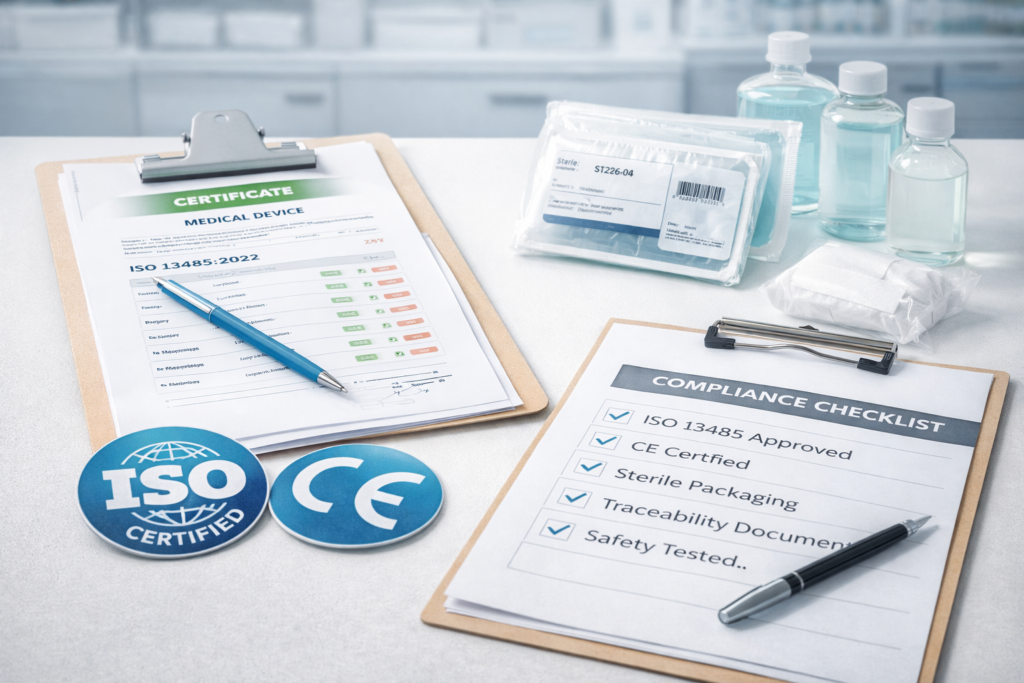
Phase 2: Understand Compliance and Regulations (Non-Negotiable)
Healthcare is a regulated industry for a reason—lives depend on it. No matter how good your pricing or branding is, without compliance, your business will not survive.
Depending on your market, you may need:
-
ISO 13485 (medical devices quality management)
-
ISO 9001 (general quality systems)
-
ISO 14001 (environmental management)
-
CE marking (Europe)
-
FDA approval (United States)
-
CDSCO or local authority approvals (India and others)
For medical-grade gloves, you’ll need to ensure your products meet FDA 510(k) requirements if selling in the US market, CE marking for European markets, and BIS certification for Indian domestic sales. Your supplier should provide these certifications, but ultimately you’re responsible for verifying their authenticity.
Your role as a supplier is not just to sell—but to ensure traceability, documentation, and safety.
Step 3: Build a Reliable Supply Chain
In healthcare, consistency matters more than speed. A delayed or poor-quality supply can shut down operations for hospitals and clinics.
When selecting manufacturers or distributors, ensure they:
-
Follow medical-grade manufacturing standards
-
Provide batch-level traceability
-
Maintain consistent quality
-
Can scale production when demand rises
-
Offer documentation and audits
Visit manufacturing facilities if possible. Look for modern, fully automated production lines with consistent quality control processes. The best manufacturers maintain strict environmental controls and conduct in-process inspections at multiple stages.
Request product samples extensively. Test them yourself and have potential customers test them. Pay attention to comfort, durability, tactile sensitivity, and chemical resistance. A glove that fails during a medical procedure or food preparation can destroy your reputation overnight.
Phase 4: Building Your Digital Presence
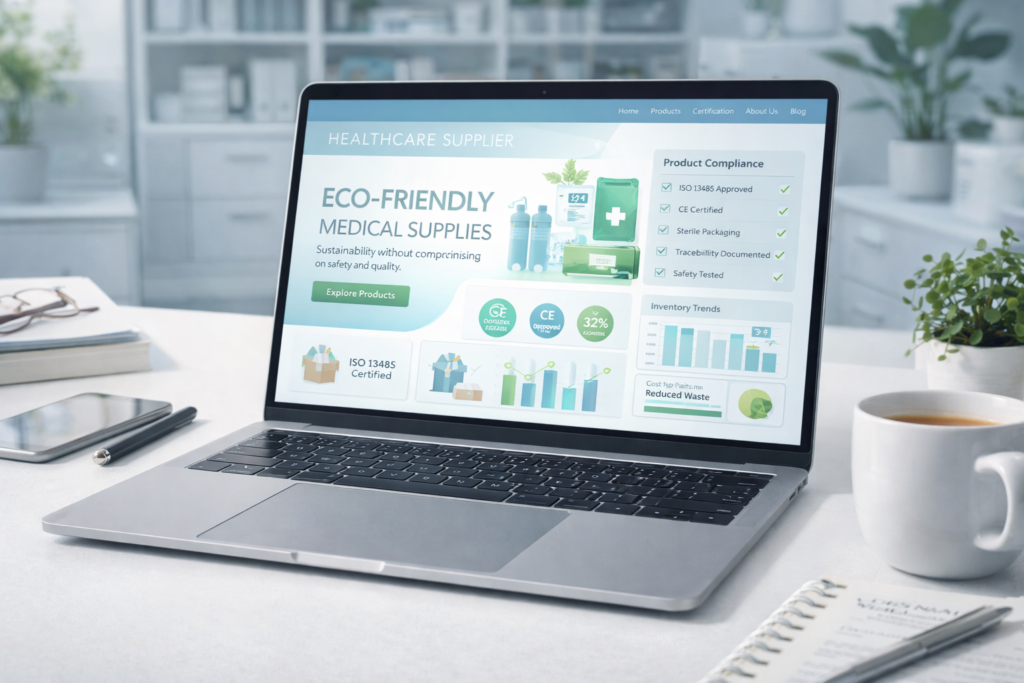
In 2026, buyers research suppliers online before making first contact. Your digital presence needs to establish credibility immediately.
Develop a professional website showcasing your product catalog, certifications, quality assurance processes, and delivery capabilities. Include detailed product specifications with actual test results, not just marketing claims. Healthcare buyers appreciate transparency and technical accuracy.
When launching your website, ensure it’s properly structured for search engine visibility. Generate a comprehensive sitemap for search engines to help Google and other search engines index your product pages correctly. This technical foundation impacts how quickly potential customers find you online.
Create educational content demonstrating your industry expertise. Blog posts about proper glove selection, disposal protocols, or emerging industry regulations position you as a knowledgeable partner, not just another supplier.
Your website should include:
-
Product listings
-
Certifications and approvals
-
About your supply chain
-
Sustainability or quality commitments
-
Blog or knowledge section
SEO plays a major role. Educational content builds trust and organic leads.
Strong blog topics include:
-
“How to Choose a Reliable Healthcare Supplier”
-
“Understanding Medical Product Compliance”
-
“Future Trends in Healthcare Procurement”
Phase 5: Sales Strategy and Customer Acquisition
Healthcare supply sales typically follow a consultative model. You’re not just selling gloves – you’re solving problems related to staff safety, regulatory compliance, and operational efficiency.
Identify your ideal first customers – typically smaller clinics, dental offices, or food businesses that larger distributors might overlook. These clients appreciate personalized service and often become loyal advocates who refer other businesses.
Develop a sample program allowing prospects to test your products risk-free. Include detailed usage instructions and follow up after their trial period to gather feedback. This consultative approach builds relationships that lead to long-term contracts.
Attend industry trade shows and local business networking events. The healthcare supply industry still values face-to-face relationships. Bring product samples, certifications in a professional presentation folder, and genuine curiosity about their specific needs.
Phase 6: Operations and Logistics
Efficient operations separate profitable healthcare supply businesses from struggling ones. Your ability to consistently deliver quality products on schedule determines customer retention.
Establish minimum order quantities that cover your costs while remaining accessible to smaller buyers. Consider offering tiered pricing that rewards larger volume purchases without alienating smaller accounts.
Develop relationships with multiple logistics partners. When a hospital needs an emergency shipment of gloves because their regular order didn’t arrive, your ability to deliver same-day or next-day becomes a competitive advantage worth premium pricing.
Implement inventory management software from the start. Tracking lot numbers, expiration dates, and stock levels manually becomes impossible as you scale. Modern systems can alert you when stock drops below reorder points and generate lot traceability reports instantly.
Phase 7: Scaling and Diversification
Once you’ve established reliable operations with your core product line, strategic expansion opportunities emerge. Consider adding complementary products like face masks, surgical caps, protective gowns, or hand sanitizers.
Evaluate expanding into adjacent markets. If you’ve built strong relationships with dental offices, veterinary clinics represent a natural expansion. The product requirements are similar, but you’re diversifying your customer base.
Develop expertise in specific niches. Becoming the go-to supplier for a particular industry segment – like food manufacturing facilities or industrial clean rooms – creates pricing power and customer loyalty that generalist distributors can’t match.
As you grow:
-
Audit suppliers regularly
-
Track quality metrics
-
Invest in compliance systems
-
Expand product lines slowly
-
Maintain documentation discipline
The most successful healthcare supply businesses grow steadily, not recklessly.
The Reality Check: Challenges and Solutions
Starting a healthcare supply business isn’t easy. You’ll face cash flow challenges as you balance paying suppliers upfront against 30-60 day payment terms from customers. Competition from established distributors will be fierce. Quality control issues will occasionally arise despite your best efforts.
Success comes from meticulous attention to product quality, customer service excellence, and operational reliability. The businesses that thrive treat every order as an opportunity to demonstrate why customers should stick with them long-term.
In an industry where lives literally depend on product reliability, there’s no room for shortcuts or compromise. But for entrepreneurs willing to build systematically, prioritize quality, and serve customers with genuine dedication, the healthcare supply industry offers substantial opportunities for profitable, meaningful business growth.
The market is growing, quality standards are rising, and buyers are actively seeking reliable suppliers who understand their needs. If you approach this opportunity with proper planning, strong supplier partnerships, and an unwavering commitment to quality, 2026 could be the year you build something significant in the healthcare supply industry.